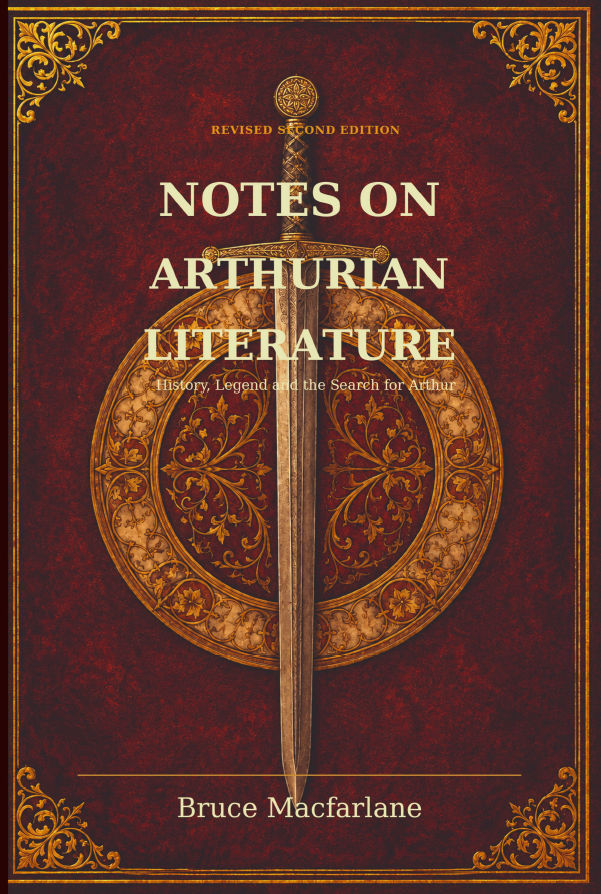
Who was King Arthur, and how much of his story might have originated in the history of post-Roman Britain?
Notes on Arthurian Literature examines the origins of King Arthur and the historical events that may lie behind the legends. It considers the difficulties involved in dating events during the early medieval period and explores the possible influence of climatic, environmental and astronomical phenomena on Britain during the fifth and sixth centuries.
The book also investigates the Celtic origins of the Grail traditions and asks why the Grail stories became prominent during the Crusades, particularly after the fall of Jerusalem in 1187. It then considers their reappearance in Sir Thomas Malory’s Le Morte Darthur, written following the fall of Constantinople in 1453.
Subjects covered in the book are;
- The origins and possible historical identity of Arthur
- Arthur’s possible connections with recorded historical events
- Problems with dating events in the fifth and sixth centuries
- Climatic and astronomical phenomena in early medieval Britain
- The appearance and development of the Grail stories
- Historical characters and events reflected in the Grail literature
- Celtic and other possible origins of the Grail and its principal characters
- Malory and the later development of the Arthurian tradition
Appendices
- Genealogical tables from Arthurian texts
- The Origin of Brutus.
- Arthur and Tintagel.
- Arthur and the Alans.
- Military Orders and Societies.
- The Roman Towns of Nennius.
- Notitia Dignitatum.
- A Table of Climatic & Astronomical Events ( a copy can be found here)
An introduction to my notes can be found on this page and my bibliography of arthurian literature can be found here
My Notes on Arthurian literature is available in paperback and Kindle on Amazon.
